











Firing employees might look like the easiest job but not for this delivery manager in Chennai. For him, a routine working day turned into one of the most difficult days of his career when the upper management asked him to let go of 12 people from his team. The instruction, he says, came from senior leadership during a closed-door meeting, with a deadline: he had to inform all 12 employees by Friday.In an emotional post shared by Madras Techies, the Chennai manager his team mates call ‘Anna’ (big brother) and how the decision had left him sitting alone in his car in the office parking basement, crying with his face buried in the steering wheel.In the post shared on social media, he admitted that he felt so broken that he wanted to resign himself so he wouldn’t have to do it.No discussions, no warnings or no second chances
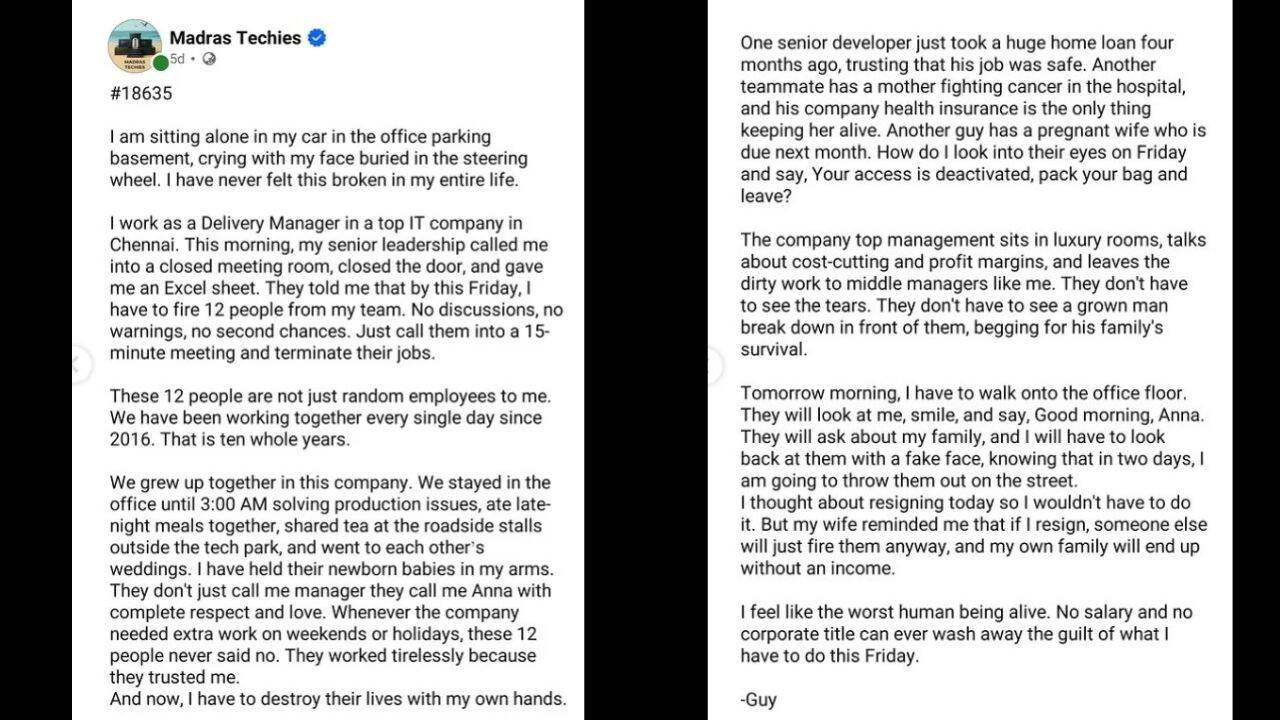
The viral post
The manager, who didn’t disclose his identity, said that this was not simply another corporate restructuring exercise or a headcount reduction. These were those 12 team members whom he had spent the last 10 years working, planning and delivering. The team has been solving problems, working through late nights and sharing moments well beyond office walls and had become a family. And now, he was expected to ask them to leave, just like that.The less-discussed side of corporate layoffsThe emotional burden of firing people is something that people don’t talk about often. Such ‘dirty jobs’ are placed on middle managers who are expected to communicate decisions they may have had no role in making.‘We grew up together’: A decade of memories behind the 12 namesAccording to him, the 12 employees had been working with him since 2016. Over the years, they had grown together and built relationships. He recalled how the team would stay in the office until 3 am to resolve production issues, share late-night meals and have tea at roadside stalls outside the tech park.The manager also remembered how his team had never hesitated when the company needed them to work extra hours on weekends or holidays.“They worked tirelessly because they trusted me,” he wrote. “And now, I’ll have to destroy their lives with my own hands”.A home loan, cancer treatment and a childbirth
Asking employee to leave (Canva)
Now the problem with this manager is also that he knows his team personally as well. He wrote that one senior developer had reportedly taken a substantial home loan just four months earlier, believing that his job was secure.He further mentioned that another employee’s mother was undergoing cancer treatment in a hospital and the company’s health insurance was the only thing helping the family.A third team member was preparing to welcome a child, with his pregnant wife due to deliver the following month.Thinking about all these moments just made him emotional. For the manager, these were an employee spreadsheet. He knew about their families, finances and personal struggles. He understood that losing a job could affect not just the employee but everyone depending on that person’s income and benefits.“How do I look into their eyes on Friday and say, Your access is deactivated, pack your bag and leave?” he questioned.Why should middle managers bear the emotional burden?In his post, he alleged that senior leadership discussed cost-cutting and profit margins in comfortable meeting rooms while leaving middle managers to handle the difficult conversations with employees.“They don’t have to see the tears. They don’t have to see a grown man break down in front of them, begging for his family’s survival,” he wrote. His frustration reflected the difficult position of managers who often find themselves caught between decisions made by senior executives and the people they supervise.While they are expected to implement organisational directives, they may also have personal relationships with the employees affected. They are the ones who have worked alongside them, understood their challenges and built teams over several years.On the thought of resigningThe manager was so overwhelmed that he thought of resigning himself. However, his wife reminded him that leaving his job would not necessarily save the 12 employees. Someone else would carry out the terminations, while his own family would also lose its source of income.That realisation left him feeling trapped between his professional responsibilities and his personal conscience.And he calls himself, ‘I feel like the worst human being alive’.Perhaps the most heartbreaking part of the account was the manager’s anticipation of facing his team the following morning.He imagined walking onto the office floor, smiling and exchanging greetings as usual. The employees would ask him about his family, just as they had always done. He would have to respond normally, knowing that he was expected to end their employment within days.“Good morning, Anna,” he imagined them saying.For the person or the middle manager asked to deliver the bad news, it could mean watching a decade of shared memories turn into conversations he never wanted to have with the team he became family with.