









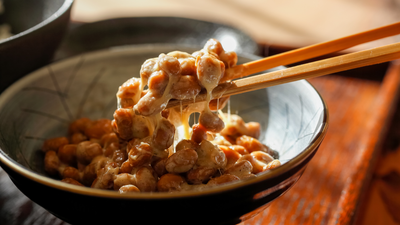
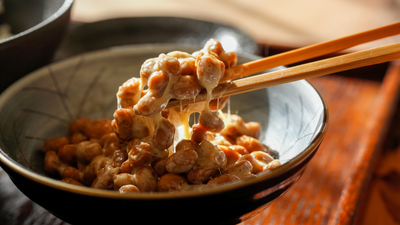
It is smelly, slimy and full of bacteria, and every morning, millions of people reach for their chopsticks to dig into this Japanese breakfast staple. Isn’t breakfast supposed to be the best meal of the day?We are talking about natto, a traditional Japanese food made from fermented soybeans. Its pungent, ammonia-like smell and mucus-like consistency make it polarising, even among those who grow up eating it.But, if it is so off-putting, why do so many people hail it as a breakfast for champions? And why is this fermented soybean superfood going global, one slimy mouthful at a time?
Origins of natto
Natto’s exact origins are unknown. Some believe it was introduced to Japan from China by Buddhist monks during the Yayoi period (300BC-AD300), before becoming a staple among rural communities during the Edo period (1603-1868).A more prosaic explanation is that natto is the accidental byproduct of conflict, based on the legend of Minamoto no Yoshiie, a military commander during the Heian period (794-1185), whose troops discovered that simmered soya beans originally intended for their horses, but which had been left to fester in the heat for days after an enemy sighting, had taken on a viscous, pungent quality. Presumably famished by the demands of battle, they ate them anyway, and liked them enough to offer them to their master, who was similarly impressed.These story makes for a memorable origin, although there is no definitive evidence to establish it as fact.
What does natto taste like?
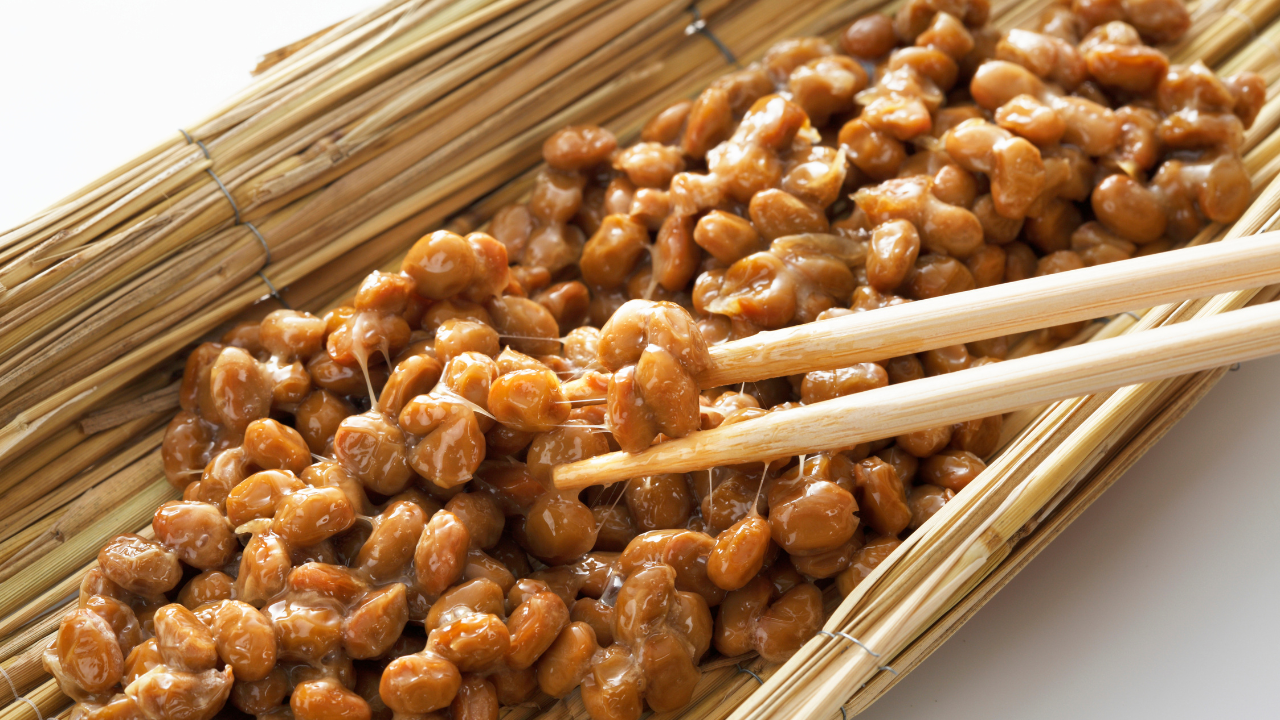
Natto has a sticky texture, which is what most people find hard to overcome.
Natto is obviously an acquired taste, and its texture is often the first hurdle. Stir the beans with chopsticks and they begin to produce long, sticky threads. Its smell is pungent, sometimes compared to aged cheese, while its flavour is savoury, earthy and slightly bitter.The most common way to eat natto is nattō gohan, a bowl of steamed rice topped with the fermented beans. Soy sauce and karashi, a Japanese mustard, add flavour, while chopped spring onions provide a fresh contrast. Some people mix in kimchi or a raw egg, depending on their preferences.Natto also finds its way into sushi rolls, toast, miso soup, omelettes, salads, fried rice and even pasta. Its popularity varies across Japan. It is particularly associated with eastern Japan and the Kantō region, while it has traditionally been less popular in parts of western Japan, including Kansai.For those who dislike the smell and texture of natto, “dried natto” and “fried natto” were developed around 1990. The smell and stickiness are reduced, making it easier to eat for those who do not like conventional natto. Another type of fermented soybeans called mamenoka has also been developed by developing versions of natto bacillus varieties that result in less sticky natto.
How is natto made?
Natto is made from soybeans, typically natto soybeans. Smaller beans are preferred, as the fermentation process will be able to reach the center of the bean more easily.The beans are washed and soaked in water for 12 to 20 hours to hydrate them, and increase their size. Next, the soybeans are steamed for six hours, although a pressure cooker may be used to reduce the time.The cooked beans are mixed with the bacterium Bacillus subtilis, known as nattō-kin in Japanese. From this point on, care must be taken to keep the ingredients away from impurities and other bacteria. The mixture is fermented at 40 °C for up to 24 hours. Afterward, the natto is cooled, then aged in a refrigerator for up to one week to allow the development of stringiness.The result is a food rich in plant protein, fibre and other nutrients, with a distinctive texture that sets it apart from other soybean products.
How do people eat natto?
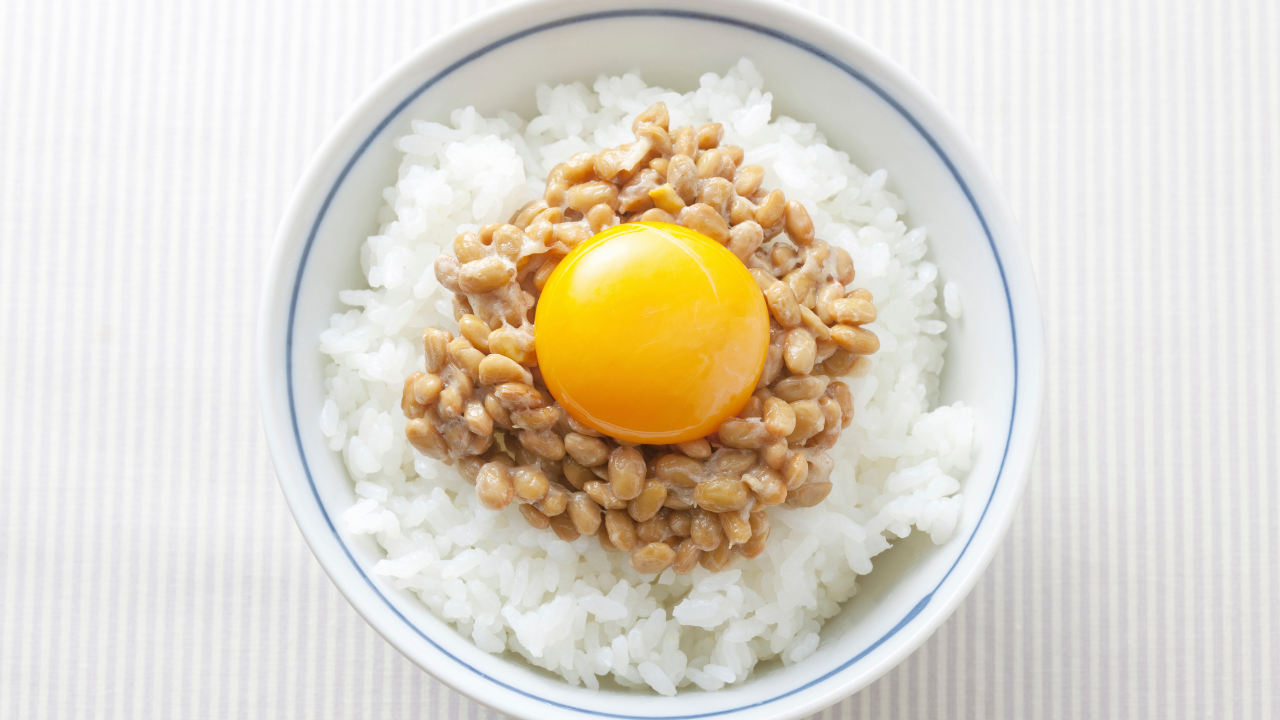
Natto Gohan is the most common way Japanese enjoy Natto.
Savory Natto Toast
Natto Toast is a modern fusion that beautifully marries Japanese tradition with Western breakfast classics. Spread a layer of well-mixed, frothy natto evenly across a thick slice of artisanal shokupan or sourdough bread. Blanket the top generously with shredded mozzarella or mild cheddar cheese, then broil until melted and golden brown. The melted cheese mellows the intense aroma of the beans, creating an incredibly gooey, satisfying, and umami-rich morning treat.
Natto Soba Noodles
Natto Soba is a cool refreshing option for a quick, healthy lunch. Toss chilled buckwheat soba noodles with a generous portion of whipped natto, grated nagaimo (mountain yam) for extra fluffiness, and fresh okra. Pour a light, savory tsuyu broth over the dish and garnish with shredded nori seaweed and a touch of fresh wasabi. The slippery textures blend seamlessly, creating a wonderfully cool, nutrient-dense meal.
Classic Natto Gohan
Last, but definately not the least, Natto Gohan is the classic timeless preparation in Japanese households. To prepare it, vigorously whip the fermented soybeans with its included dashi soy sauce and hot mustard until incredibly frothy. Pour the sticky mixture over a steaming bowl of freshly cooked white rice. Top with finely chopped green onions, a drizzle of toasted sesame oil, or a raw egg yolk for a rich, silky texture that perfectly balances the pungent, savory flavors.
Why do people eat natto for breakfast?
Natto has long been valued in Japan as an affordable, convenient and nutritious food. Served over rice, it makes a filling breakfast that combines carbohydrates with plant protein. Its fermented status has also brought it renewed attention as consumers around the world explore foods such as kimchi, kefir and kombucha.Much of the interest in natto comes from its potential health benefits. Fermentation changes the composition of soybeans and produces compounds that researchers are investigating for their effects on human health. Natto is particularly rich in vitamin K2, including menaquinone-7 (MK-7), which plays a role in normal blood clotting and bone metabolism.A 2025 systematic review and meta-analysis examined six studies involving 2,327 people and found that habitual natto consumption was associated with higher vitamin K2 levels and some indicators of better bone health.A 2020 study published in The BMJ followed 92,915 Japanese adults over an average of nearly 15 years. Researchers found that higher consumption of fermented soy products, including natto and miso, was associated with lower overall mortality. Natto intake was also associated with lower cardiovascular disease mortality in both men and women.
Is natto really disgusting?
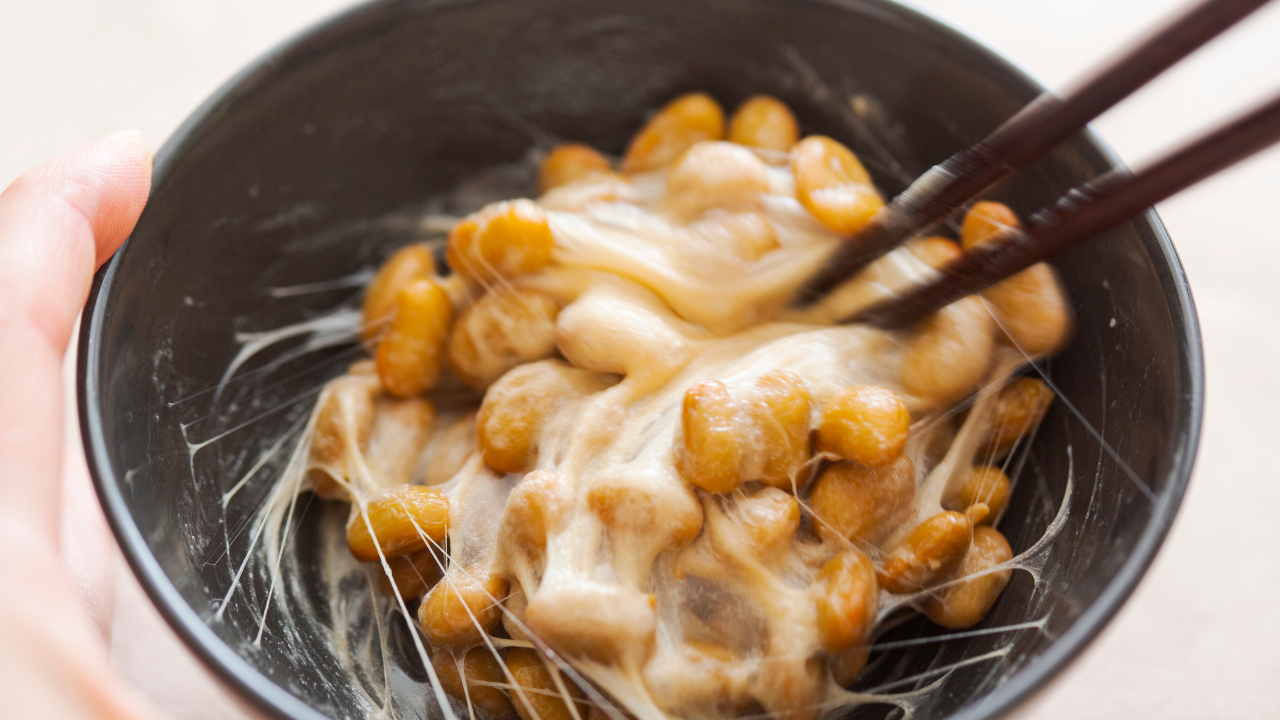
Natto when whipped rigrously creates a mucous-y texture.
Despite its reputation as a superfood, however, nattō has failed to gain popularity outside of Japan. It has, however, attracted enough attention to end up in the Disgusting Food Museum in Malmö, Sweden. Here, visitors can explore foods that challenge how far their tastebuds are willing to go.However, it is important to be respectful of other cultures, especially when using negative connotations such as disgusting. Disgust is objective, shaped by culture and familiarity. A texture that seems unappetising to someone encountering natto for the first time may be entirely ordinary to a person who has eaten it since childhood.Its pungent aroma and sticky strands can be difficult to get past, but natto is also deeply rooted in Japanese food culture. As food trends lean towards fermented food and drinks, such as kimchi, kefir and kombucha, it feels like natto’s time is just around the corner.