









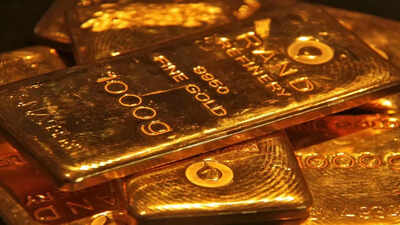
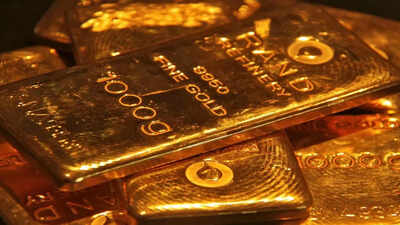
Turning mercury into gold sounds like a myth cooked up by medieval alchemists, but a San Francisco tech startup claims it just pulled it off using nuclear fusion.On October 21, Marathon Fusion announced that it successfully transformed mercury into stable gold atoms by bombarding the liquid metal with neutrons from fusion reactions. Even wilder? The company claims its production rate beat the previous benchmark set by CERN in 2025 by a factor of ten.“Last month, we demonstrated high-rate alchemy: turning mercury into real, stable gold, beating CERN’s record by a factor of 10,” the startup posted on X.It’s a massive headline, but it comes with plenty of unanswered questions. Marathon Fusion hasn’t revealed the exact amount of gold it actually created, and the claims haven’t been independently verified through published peer reviews yet.
How did they actually do it?
This wasn’t a sudden fluke. Back in 2025, Marathon Fusion published research exploring whether nuclear fusion reactors could be tweaked to manufacture precious metals alongside generating electricity. This latest announcement is their first proof-of-concept test.The startup shared gamma-ray readings that show traces of mercury-197 and gold-197 following neutron radiation. And gold wasn’t the only element on their menu. They also used fusion-generated neutrons on zinc, successfully producing copper-64 and copper-67 – two radioactive isotopes heavily used in medical imaging and targeted cancer therapies.If the technology holds up, fusion power plants might eventually double as manufacturing hubs for rare, expensive isotopes that are brutal to produce using standard methods.
The physics: No magic required
There’s no magic spell here; it’s a standard nuclear process called transmutation, which changes an element’s atomic structure by altering its nucleus.Chemical reactions can’t do this because they only shuffle electrons around. Nuclear reactions, on the other hand, hit the nucleus directly.Marathon Fusion’s process starts with mercury-198, a common, stable isotope. When you blast mercury-198 with high-energy neutrons from a deuterium-tritium fusion reaction, the mercury atom absorbs a neutron and turns into mercury-197. That new isotope is unstable and naturally decays into gold-197, which is 100% real, non-radioactive gold.
Can we expect tonnes of manufactured gold?
Marathon Fusion certainly thinks so down the road. In their 2025 paper, they pitched lining a commercial fusion reactor’s core with a “blanket” of liquid mercury. As the reactor runs, escaping neutrons would react with the mercury, generating gold continuously.They estimated that a typical 1-gigawatt plant could churn out roughly two tonnes of gold a year. At current market prices, selling that gold could give power companies a massive extra revenue stream without reducing electricity output.Two tonnes sounds huge, especially compared to the microscopic particles created in physics labs. But that number is strictly a theoretical projection, not something the company has demonstrated on a commercial scale.Building a stable, net-energy-positive fusion reactor is already one of the hardest engineering problems on the planet. Right now, there isn’t a single commercial fusion plant feeding electricity into the grid, let alone making precious metals.
How it compares to CERN
Marathon Fusion’s claim naturally draws comparisons to CERN’s own gold-making experiment in 2025.Physicists running the ALICE experiment at the Large Hadron Collider discovered that smashing heavy lead ions together at near-light speeds occasionally knocked out enough protons to turn lead nuclei into gold.The problem? The output was practically invisible.Over three years of high-energy collisions, CERN produced an estimated 86 billion gold nuclei—which adds up to a microscopic 29 picograms. To make matters worse, those gold atoms were unstable and shattered almost instantly.While Marathon Fusion claims to have beaten CERN’s output by 10x, their neutron bombardment method is fundamentally different from particle smashing. Without full access to their raw data, it’s impossible to verify how that 10x metric was calculated.
Will gold prices crash anytime soon?
Don’t expect the gold market to notice this anytime soon.Even if the physics checks out, scaling this process up to make financial sense is a nightmare. Working with raw mercury and nuclear radiation requires heavy shielding and strict environmental controls. Every ounce of synthesized gold would need rigorous testing for residual radiation, and filtering out dangerous isotopes isn’t cheap.For now, Marathon Fusion’s test is an exciting scientific milestone, but you won’t see lab-grown gold hitting jewelry stores in the near future. It’s an incredibly cool proof of concept, and proof that while medieval alchemists had the wrong tools, they technically had the right idea.