








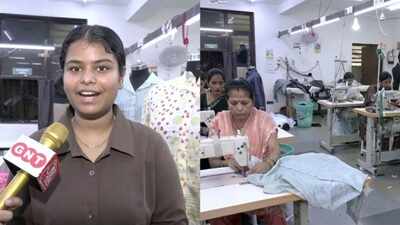
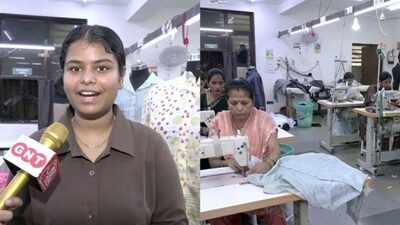
At 17, while many students are preparing for board exams and thinking about college, Rahini Bansal is already building something that is changing lives. The Noida student started Sutradhar, an initiative that combines skill training, employment, and textile waste management. What began with just six women in 2024 has now grown into a community of more than 250 women, particularly from villages. Through the initiative, women are trained in sewing, embroidery, and knitting; given discarded fabric from the textile industry; and connected with paid work they can do from home. Their reported monthly earnings range from Rs 4,000 to Rs 25,000.
A school student with a much bigger idea
Rahini’s interest in women’s financial independence began when she was in Class 10. Instead of looking at employment only as a way to earn money, she wanted to find a model that could work around the realities of women living in rural areas. Many women may have useful skills but cannot travel long distances for a job because of household responsibilities. Sutradhar was designed around that challenge.The idea was simple: teach women skills they could use at home and then connect those skills with an income. Women and girls learn practical crafts such as sewing, embroidery and knitting. They are then provided with textile scraps that might otherwise be thrown away. These materials can be turned into shirts and other useful products.This creates a model with two goals at the same time. Fabric waste gets a second life, while women get an opportunity to earn. More importantly, the work can be done for a few hours according to each woman’s schedule, making it easier for them to balance work with family responsibilities. For women who had never earned their own money, even a modest monthly income can make a meaningful difference.
When one woman starts earning, the whole family feels it
The impact of Sutradhar is perhaps best understood through the women who are part of it. For 45-year-old Shobha, who previously had no personal income, the work has helped her contribute towards her children’s education. Chanda is using her earnings to support better schooling for her children. Prachi is putting her income towards her own BA studies and hopes to become a fashion designer. Another participant, Monica, is using what she earns to pay for her brother’s computer training.The initiative has also reached women who have faced difficult personal circumstances. For one survivor of domestic violence, having her own income became a step towards financial independence and rebuilding her life. These stories show that the value of employment is not always measured by the amount in a bank account. Earning independently can bring confidence, decision-making power, and the feeling that one has greater control over one’s future.
Turning what others throw away into something valuable
The environmental side of Sutradhar is equally important. Textile waste is often treated as something with little value once it leaves a factory or production unit. Rahini’s model looks at those scraps differently. Instead of allowing usable fabric to go to waste, the material is collected and given to trained women who can turn it into new products. In that sense, Sutradhar connects sustainability with livelihood rather than treating them as two separate issues.What makes Rahini’s story particularly striking is her age. She is still a Class 12 student while managing an initiative that has already reached more than 250 women. She started with six participants and has continued to expand the idea while balancing her own education. Her journey is a reminder that meaningful change does not always begin with a large organisation, a huge bbudget,or years of experience. Sometimes, it starts with a student noticing a problem and asking a simple question: What if something people consider waste could become someone’s opportunity? For Rahini, the answer is already reaching hundreds of women one skill, one piece of fabric, and one income at a time.