









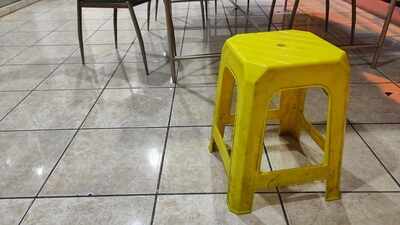
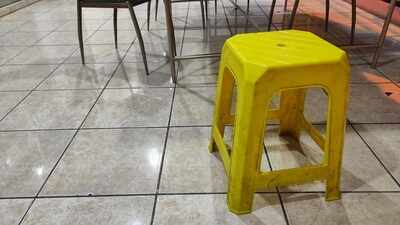
You may have sat on a plastic stool many times without ever wondering about the small hole in its center.It is such a familiar sight in homes, shops, classrooms, and outdoor spaces that it barely registers anymore. But once you notice it, the question is hard to ignore: why does a stool need a hole there in the first place?The answer is less mysterious than it looks. The opening is a practical piece of design that can make the stool easier to store, move, and use.
It helps separate stools after stacking
Plastic stools are often designed to fit inside one another, allowing several of them to be stored in a relatively small space.When smooth surfaces sit tightly together, air can become trapped between them. As the stools are pulled apart, that trapped air can create resistance and make the stack harder to separate.The opening allows air to enter the space between the nested stools, reducing that problem.For anyone who has ever tried to pull apart a tightly packed pile of plastic stools, this small detail suddenly makes much more sense.
It gives you a place to grab
The hole also has a very simple everyday use: it can serve as a handle.Instead of reaching for the edge of the seat, you can slip your fingers through the opening and lift the stool. This is particularly handy when furniture needs to be moved around frequently.The location is useful too. A grip close to the center gives the person carrying the stool a more controlled hold than grabbing a distant corner.
It allows water to drain away
A plastic stool can easily end up outdoors during a rain shower or get soaked while being washed.Without an opening, water can remain on the seat until it is wiped away or evaporates. A hole provides a direct route for the liquid to escape.That makes the feature particularly useful on stools that are kept on balconies, gardens, terraces, or other areas where they may regularly come into contact with water.
It can also reduce unnecessary material
There is a less obvious benefit to leaving part of the seat open.A stool does not need a completely solid sheet of plastic across its entire seating surface. Removing a small section means there is less material in that particular area, which can contribute to a lighter product.For manufacturers producing large quantities, even a small reduction in material per stool can become significant across an entire production run.The exact amount saved depends on the stool’s shape, size, and manufacturing method, so this is a design consideration rather than a universal rule for every plastic stool.
The shape matters too
Most of these openings are circular rather than square or sharply angled.A rounded opening avoids sharp internal corners, which can create concentrated stress in plastic components. That does not mean the hole itself makes a stool stronger, because durability depends on the entire design, including the material, thickness, and supporting structure.The circular shape is simply a practical way of creating an opening without introducing unnecessary sharp corners.
One tiny feature, several practical jobs
There is no single explanation that applies identically to every plastic stool. Different manufacturers can design their products for different priorities.But on many common designs, that little opening can help with stacking, handling, drainage, and material efficiency.That is what makes it interesting. The hole is small enough to disappear from view once you sit down, yet its design can solve several everyday problems at once.So the next time you see one, you may find yourself looking at that tiny circle differently. It was never just an empty space in the middle of the stool.Thumb image: Canva (for representative purposes only)