









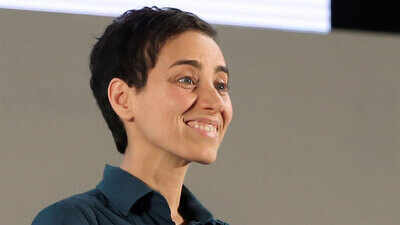
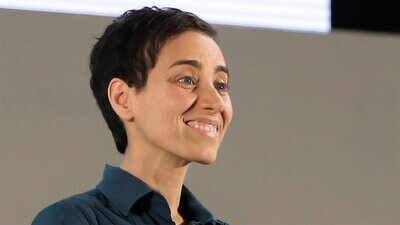
For many students, mathematics can sometimes feel like a race: solve the problem quickly, reach the answer and move on to the next question. Maryam Mirzakhani approached the subject differently. She described herself as a “slow thinker”, believing that understanding difficult mathematics required time, patience and sustained effort.That approach eventually took her from mathematics competitions in Iran to Stanford University, and in 2014, to one of the highest honours in mathematics — the Fields Medal. She became the first woman and the first Iranian to receive the prestigious award.Her journey remains an inspiring lesson for students who may feel that speed is the only measure of mathematical ability.
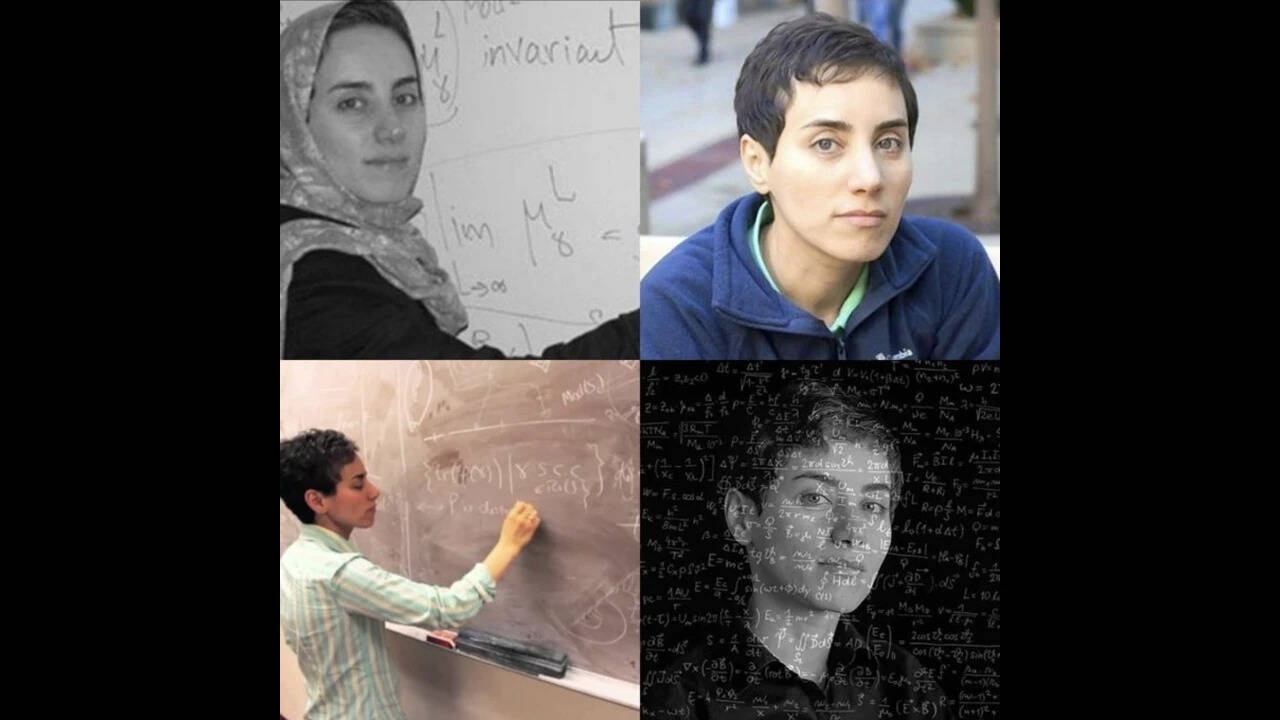
From Olympiad champion to Fields Medal winner: The extraordinary journey of Maryam Mirzakhani
From a teenage Olympiad champion to Harvard
Born in Tehran, Iran, on May 12, 1977, Mirzakhani did not initially dream of becoming a mathematician. As a child, she wanted to become a writer. Her interest in mathematics, however, grew during her school years.At 17, she became the first Iranian girl to win a gold medal at the International Mathematical Olympiad in 1994. She won another gold medal the following year, achieving a perfect score.She went on to study at Sharif University of Technology before moving to the United States for higher studies. In 2004, she earned her PhD from Harvard University.Her academic journey continued rapidly. By the age of 31, she had become a professor at Stanford University, where she pursued research that would eventually earn her international recognition.
The mathematics behind her breakthrough
Mirzakhani’s research focused on areas including hyperbolic geometry, topology, dynamical systems and Riemann surfaces — highly advanced fields that examine the structure and behaviour of complex geometric spaces.What made her approach particularly distinctive was her willingness to spend long periods exploring a problem rather than immediately searching for an answer.She was known for covering large sheets of paper with drawings and diagrams while trying to understand complex mathematical ideas. Her daughter once described these drawings as her mother’s “paintings”.Mirzakhani’s work transformed the understanding of the geometry and dynamics of Riemann surfaces and their moduli spaces. Her research also helped establish connections between different areas of mathematics that had previously appeared separate.Some of her results were described as having a “magic wand” quality because they provided powerful new ways of approaching long-standing mathematical problems.
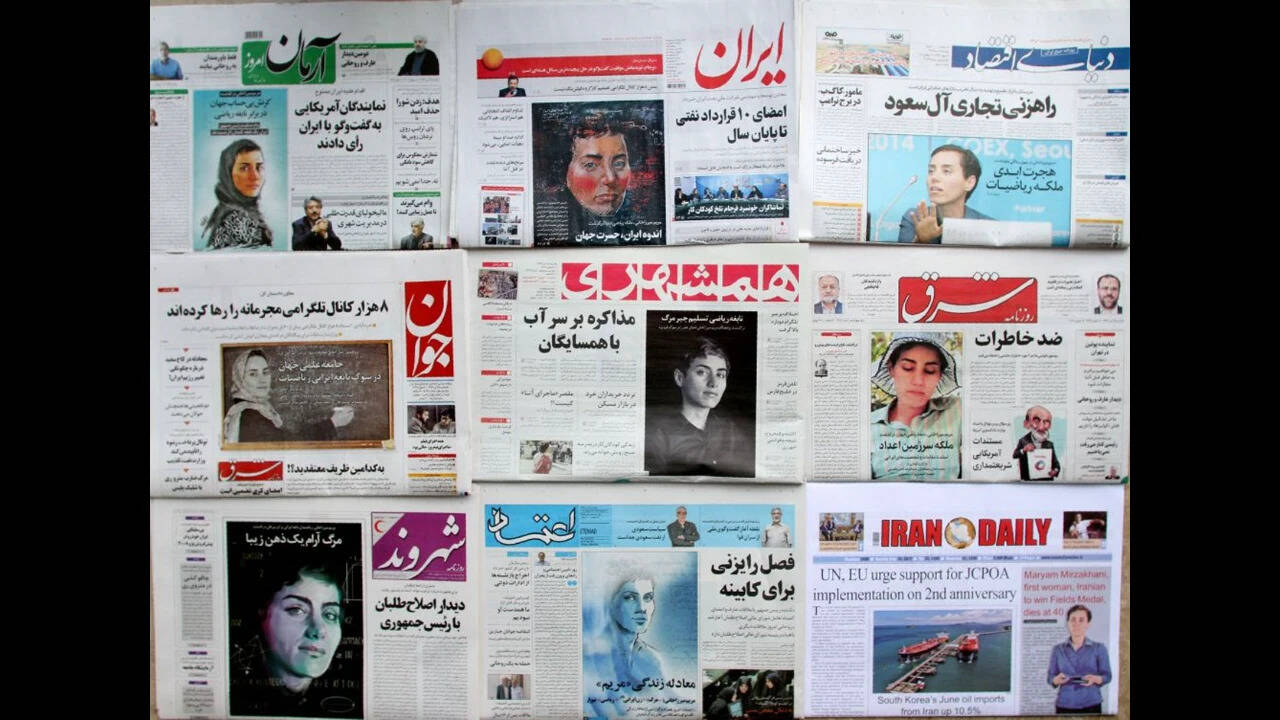
Maryam Mirzakhani: How a ‘slow thinker’ became a mathematics legend. (Getty Images)
The first woman to win the Fields Medal
In 2014, Mirzakhani made history when she was awarded the Fields Medal, often described as one of the highest honours in mathematics.The award is presented every four years to outstanding mathematicians, and Mirzakhani became the first woman in the history of the prize to receive it.She was also the first Iranian mathematician to win the medal.Her achievement carried significance far beyond the mathematical community. For young women and students from countries that have historically been underrepresented in advanced mathematics, her success became a powerful example of what sustained curiosity and intellectual courage can achieve.Yet Mirzakhani’s story was tragically short. She was diagnosed with breast cancer in 2013. By 2016, the disease had spread to her bones and liver. She died on July 14, 2017, at Stanford Hospital, aged just 40.Her influence, however, continues through the mathematicians and students inspired by her work.Her birthday, May 12, is observed as Women in Mathematics Day, celebrating women mathematicians and encouraging greater participation in the field.For students, perhaps the most enduring lesson from Mirzakhani’s life is that mathematics is not always about being the fastest person in the room. Sometimes, the most important breakthroughs come from someone willing to sit with a difficult question, draw it from different angles, make mistakes and keep thinking.Mirzakhani showed that being a “slow thinker” was not a weakness. It was part of the way she discovered extraordinary ideas.Disclaimer: This article is based on the information provided and is intended for educational and informational purposes.