









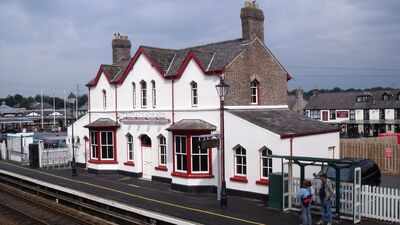
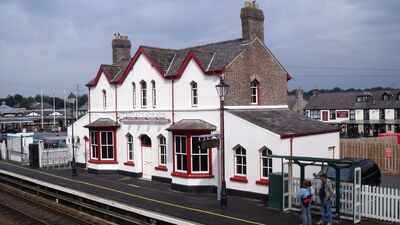
In north-west Wales, there is a village whose name has become almost a joke in itself, printed on souvenirs, railway signs and the occasional breathless attempt at pronunciation. Llanfairpwllgwyngyllgogerychwyrndrobwllllantysiliogogogoch doesn’t just stand out because of its length. It carries a sense of something assembled rather than inherited, as if parts of local history were stitched together for effect. Visitors tend to arrive expecting a straightforward origin story, but what they usually find is a mixture of folklore, practical ambition and a fair amount of uncertainty. Even in everyday use, locals shorten it to Llanfair PG, which says something about how language bends under the weight of tourism and repetition. The full version still clings to the railway station sign and the public imagination, even if its beginnings are less tidy than the lettering suggests.
Llanfairpwllgwyngyll name origin and early Welsh place identity before expansion
The version of the name that now circulates wasn’t always there in full. Older records suggest a much simpler settlement identity, tied to a local pool and surrounding hazel trees. Nothing particularly unusual for rural Wales, where place names often describe small, specific features of the land rather than grand statements.At some point, though, the name began to expand. Not in one clean moment, but in increments that look almost improvised in hindsight. What had been a short Welsh description of the area gradually absorbed references to nearby landmarks and features. The result was something closer to a sentence than a name, a string of syllables that felt designed to be noticed rather than quietly used.Before it became a linguistic curiosity, the village was just another coastal settlement on Anglesey, shaped by farming, church life, and its proximity to the Menai Strait. The original naming was practical, rooted in geography rather than identity-building. A hollow, a pool, a patch of white hazel. That sort of thing.Over time, oral usage and written records began to diverge slightly, which is not unusual in Welsh place history. Different spellings appeared. Fragments were added or dropped depending on who was recording it. Nothing suggested at this stage that the name would one day become a spectacle in itself, something spoken about far more often than the village’s actual daily life.On an island in north-west Wales, the village commonly shortened to Llanfair PG is better known for its unusually long official name, a 58-letter string that was reportedly promoted during the railway age to draw in curious visitors in the mid-19th century. That extended form, Llanfairpwllgwyngyllgogerychwyrndrobwllllantysiliogogogoch, is often described as one of the longest place names in Europe and among the most famous globally.
19th-century railway influence on Llanfairpwllgwyngyll’s extended station name
The clearest shift came in the nineteenth century, when the railway arrived and with it a need to mark places in ways that would catch attention on timetables and station boards. This was not unique to Wales. Across Britain, smaller communities found themselves adjusting to a new kind of visibility, where a name could function as an advertisement as much as geography.In Llanfair’s case, local lore points towards a tailor being involved in the extended version of the name used for the station. The idea was simple enough: create something so distinctive that travellers would remember it, talk about it, and perhaps stop there out of curiosity alone. Whether that decision was formal, informal, or half-joke has never been pinned down. What matters more is that the longer version stuck, even after its original purpose blurred.The expanded name reads like a list of places folded into one another. It references a church linked to St Mary, a nearby chapel associated with St Tysilio, and features of the surrounding landscape, including the turbulent waters of the Menai Strait. These were not random additions, but they were arranged in a way that feels deliberately cumulative, as if someone kept asking what else could be included.Some accounts suggest the additions were drawn from existing local references rather than invented outright. Others argue it was more creative than that, borrowing familiar place fragments and combining them into something new. Either way, the effect was the same: a name that stretched across the map without actually moving anywhere.
Uncertain origins of Llanfairpwllgwyngyll’s name and the blurred line between folklore and fact
What complicates everything is the lack of a definitive origin point. No single document confirms exactly who assembled the long form or why it took the shape it did. Even the tailor story, often repeated, sits somewhere between oral history and educated guesswork.There are hints in older directories that suggest the name was already evolving before the supposed intervention. That leaves open the possibility that what looks like a deliberate invention may actually have been a gradual layering, later credited to one figure for simplicity’s sake.For all the uncertainty, the result has outlived its ambiguity. The village remains known less for what it is than for what it is called, a place where language became the main attraction without fully explaining how it got there.